
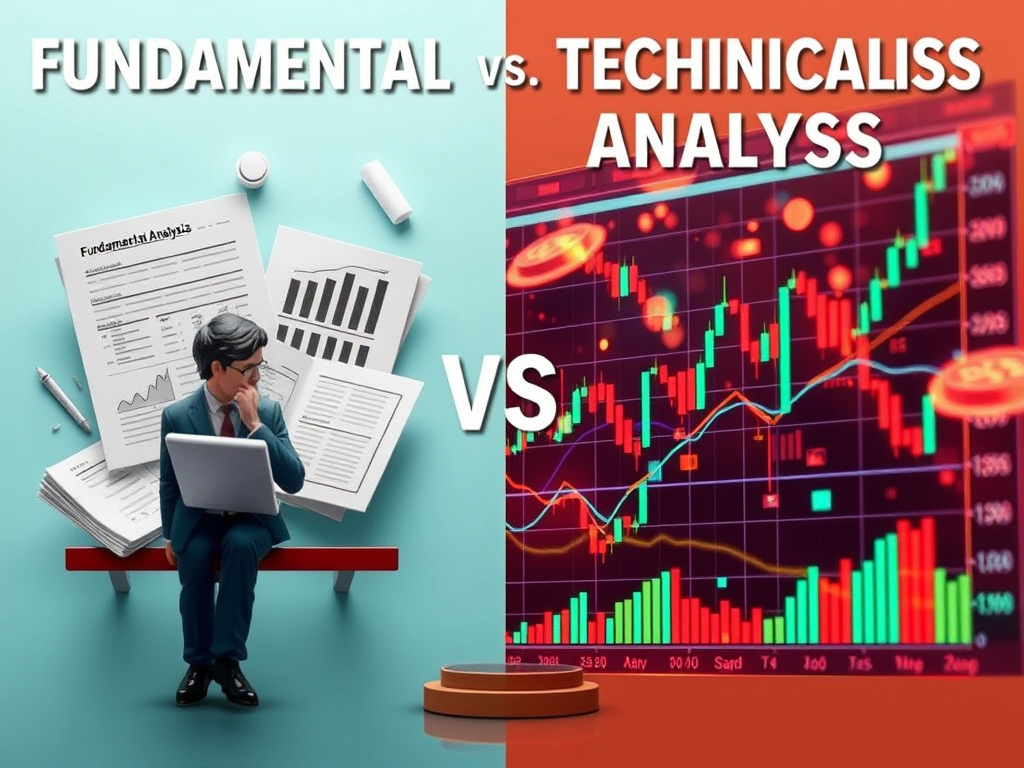
Investors often rely on two primary strategies for evaluating investments and deciding whether to invest: fundamental and technical analysis. Both focus on different aspects of securities and are beneficial depending on the type of investor who’s investing.
Fundamental analysis assesses a company’s intrinsic value by examining it’s financial statements (income, balance sheet, cash flow), performance ratios (EPS, P/E), and macro factors like industry trends, GDP, interest rates. It also takes into account the company’s ownership and how it may affect the company. A great example is Elon Musk with Tesla. He’s been very much so in the public eye recently and that has had large effects on Tesla’s share price. This approach suits long-term investors aiming to identify companies with solid fundamentals to surf as foundations for long-term growth.
In contrast, technical analysis focuses solely on price action and trading volume. It uses chart patterns and indicators such as moving averages, RSI, MACD, support/resistance, etc. These help to forecast short-term market trends.
Why Each Matters
Often times, fundamental analysis tells us “what to buy”. It’s meant to reveal whether a company is financially healthy and solid enough for long-term holding. On the other hand, technical analysis tells us “when to buy or sell”, helping us time the market by spotting shifts in momentum or trends.
Strengths & Trade-offs
Fundamental
Strengths: Deep insight into value; risk mitigation via solid financial analysis.
Drawbacks: Time-intensive; may ignore market sentiment and sudden trend shifts.
Technical
Strengths: Rapid decision-making; effective for timing and short-term entries/exits.
Drawbacks: Could overlook real value; past patterns may fail during unexpected events.
Final Takeaway
For long-term investors, begin with fundamental analysis to find companies with solid value.
For short-term traders, rely more on technicals to capture market momentum.
For a balanced strategy, use fundamentals for selection and technicals for timing. This blend can enhance returns and manage risk more effectively.
 Investing IQ
Leave a comment