
I normally don’t write on technical factors, but this one caught my attention and is particularly relevant these days.
Start with Options
To understand a gamma squeeze, you first need to understand a call option. When you buy a call option, you are paying a small fee for the right to purchase a stock at a fixed price before a certain date. Think of it like putting down a deposit to lock in today’s price on something you think is about to get more expensive. If the stock surges past your locked-in price, your option becomes very valuable. If it doesn’t, you lose only the deposit. That leverage is what makes options so attractive to traders.
When you buy a call option, someone has to sell it to you. That seller is usually a market maker, a professional firm whose job is to keep the market running by always being willing to take the other side of a trade. Selling you a call option creates risk for them: if the stock soars, they are on the hook. To manage that risk, they buy shares of the stock itself as a hedge.
Gamma and Delta
Every option has a number attached to it called delta, which measures how much the option’s price moves for every $1 move in the underlying stock. An option with a delta of 0.5 gains about 50 cents in value when the stock rises $1. Think of it similar to beta, except the relation isn’t from the stock to the market, but instead from the option to the stock. Market makers use delta to figure out how many shares they need to buy as a hedge: if they sell 100 call options with a delta of 0.5, they buy 50 shares to offset their exposure. That way, if the stock moves, their share position cushions the loss on the options they sold.
The catch is that delta is not a fixed number. It changes constantly as the stock price moves. Gamma is what measures that rate of change. It tells you how much the delta will shift for every $1 move in the stock. A high gamma means delta is moving fast, which means the market maker’s hedge is going stale quickly, and they need to keep buying more shares just to stay neutral. Gamma is highest when a stock is trading very close to a strike price, and expiration is nearby, which is exactly the conditions that exist during a squeeze. The result is that market makers are not just buying shares once to hedge. They are buying continuously, in larger and larger amounts, as the stock climbs.
The Squeeze Itself
A gamma squeeze is what happens when this dynamic spirals. A large number of traders buy call options on the same stock at once. Market makers, now holding those options, begin buying shares to hedge. That buying pressure pushes the stock price up. As the price rises toward the strike prices, gamma climbs, forcing market makers to buy even more shares. That additional buying pushes the price higher still, which triggers even more hedging. The loop feeds itself. The stock can skyrocket in just hours or days for reasons that have nothing to do with the company’s actual business performance. The price action is mechanical, not fundamental.
What is Happening Right Now
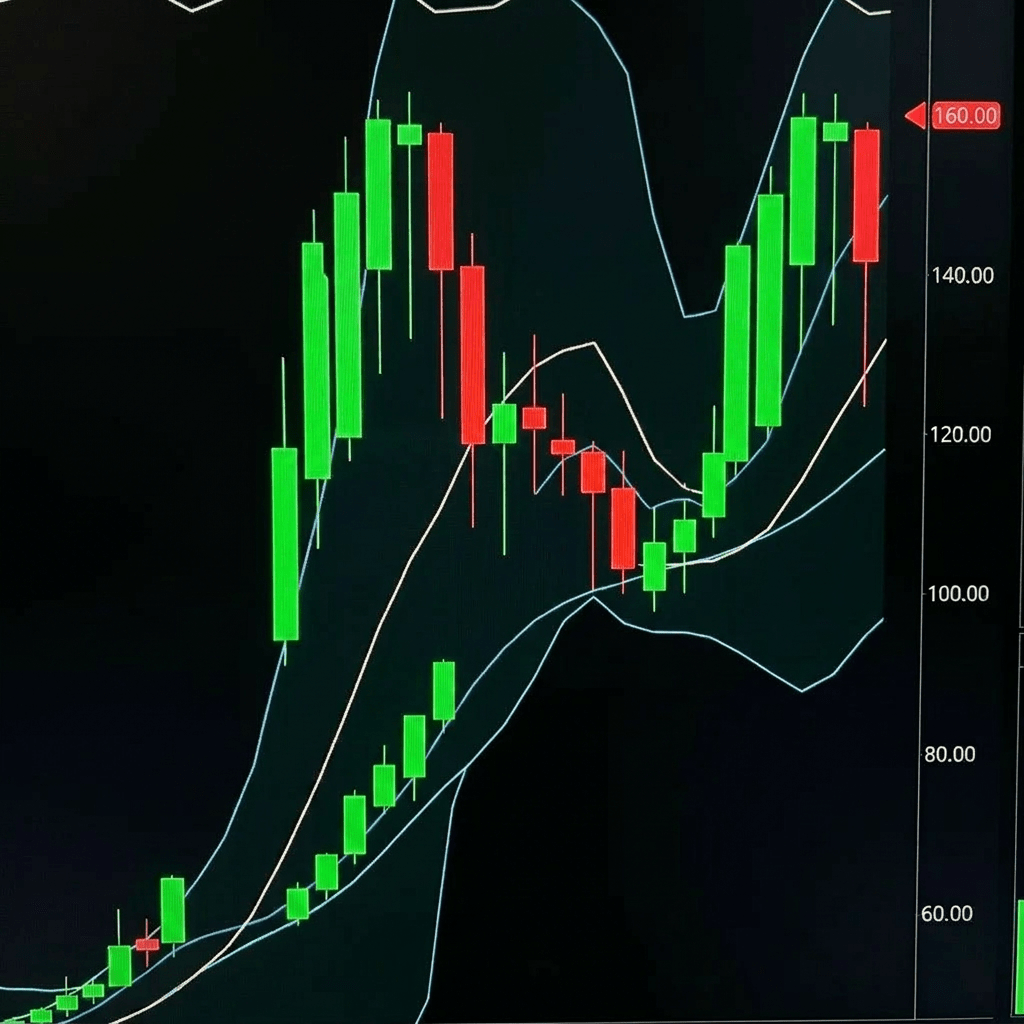
There are multiple examples of a gamma squeeze, like GameStop. But, a major one is playing out right now in Micron. Micron’s shares rose over 19% in a single session earlier this week, with post-market trading pushing the stock further above $914, and shares rose another 10% in premarket trading the following morning. The stock is now sitting on a roughly 184% year-to-date gain for 2026. Call option volumes have exploded at the same time. This has driven gamma to be concentrated in the $950 to $1,050 region, which has amplified the recent push toward $1,000.
There are real reasons to be optimistic about Micron. Demand for AI memory chips is surging, and the company’s fundamentals are genuinely improving. But, the speed and scale of this move far exceed what the business alone could justify. The options market is running the show right now.
Why It Matters
Gamma squeezes explain a category of market behavior that otherwise looks completely irrational. When a stock doubles in a week with no news, it is worth asking whether the options market is involved. Understanding this also comes with a caution: these moves unwind just as violently as they form. Once the hedging demand fades, whether because options expire, volume dries up, or traders take profits, there is no mechanical force holding the stock up. Buyers who arrive late often absorb most of the loss.


Leave a Reply