
You can find the full report on my research page! Take a look and let me know your thoughts!
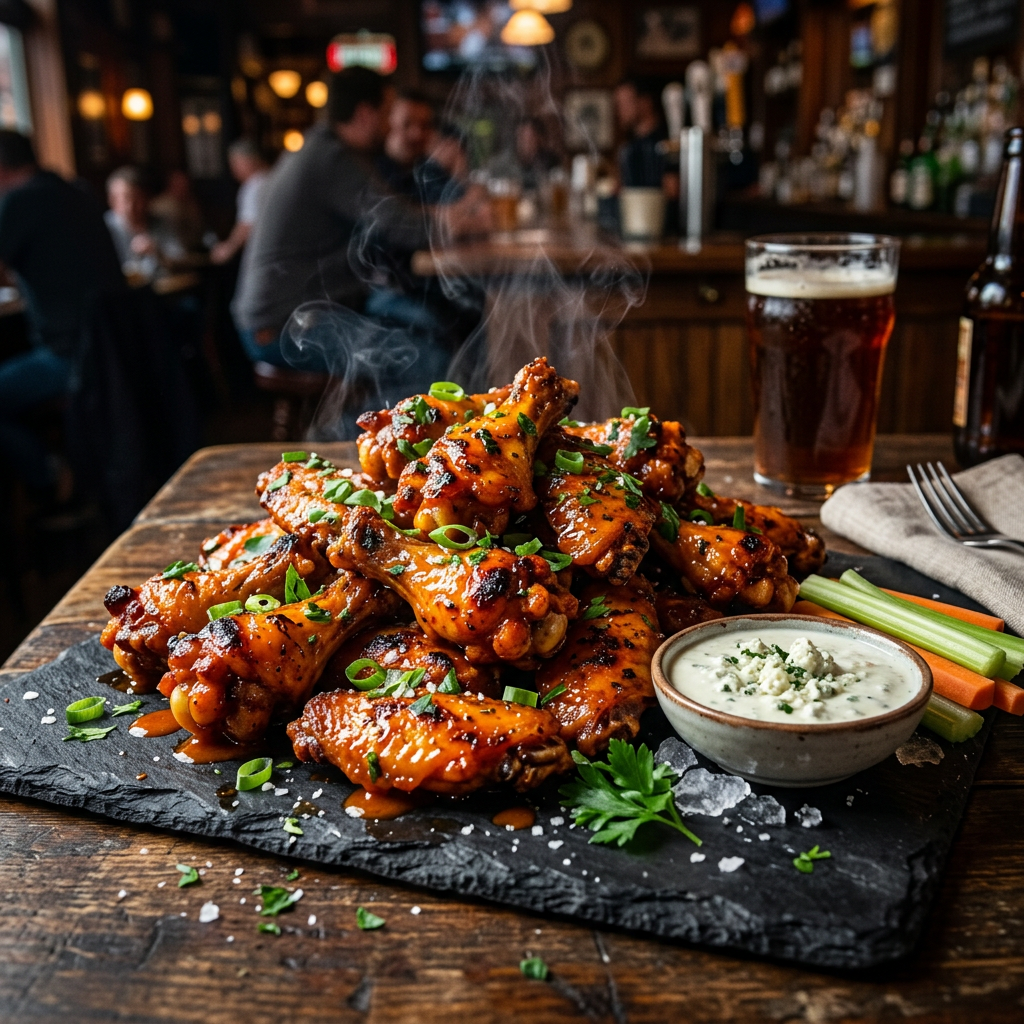
Wingstop is the largest fast-casual, chicken-wing-focused restaurant chain in the world, running a flavor-led menu of cooked-to-order bone-in/boneless wings, tenders, and chicken sandwiches across 12 signature sauces and rubs. Founded in 1994 in Garland, Texas, taken private by Roark Capital in 2010, and public again since its 2015 Nasdaq IPO, the company now spans more than 3,250 systemwide locations, with over 98% under franchise. Management’s long-term target is 10,000 stores.
The stock has had a rough year. $WING started off in the $330-340 range and spent months consolidating before an uninterrupted downtrend kicked off around February on a Q4 guidance reset, followed by a Q1 comps miss that gapped the stock down further. It’s currently sitting near its 52-week low, down significantly from all-time highs, as domestic same-store sales fell over 7% in Q2, the steepest decline in the company’s public history, driven largely by pullback among lower-income, cost-conscious consumers.
I’m initiating coverage with an Overweight rating and a $182.61 price target, roughly 60% upside from the current $114.55, blended 60% DCF / 20% P/E comps / 20% EV/EBITDA comps. That’s a middle-to-lower ground stance relative to the Street, whose targets range from $165 to $265, but I think it’s well supported. The core thesis is that Wingstop’s royalty-driven model largely decouples corporate earnings from same-store sales: since royalty and ad-fund revenue track store count and systemwide sales rather than comp trends, Q2 adjusted EBITDA still grew over 12% despite the SSS decline. I’m treating the current traffic pressure as a multi-year trough rather than a permanent reset, one that should ease as Club Wingstop (the loyalty program launched in June, already outperforming management’s expectations) and digital ordering infrastructure mature.
Beyond the thesis, I lay out a full Porter’s Five Forces breakdown against Chick-fil-A, Raising Cane’s, and Buffalo Wild Wings, a ground-up DCF with a full debt waterfall covering all three senior secured note tranches, bear/base/bull valuation cases, and a comps analysis showing Wingstop trading at a discount to peers like CAVA and Dutch Bros on both P/E and PEG despite comparable unit growth. The risk I flag most directly: if the SSS decline turns out to be more structural than cyclical, unit growth alone won’t be enough to close the gap to my target. Full report linked above!
Disclaimer:
This blog post is for educational and informational purposes only. It is not financial advice. I am not a licensed financial advisor, and nothing in this post should be interpreted as a recommendation to buy or sell any securities. Trading involves risk, and results are not guaranteed. Past performance is not indicative of future results. Always do your own research and consult with a licensed financial professional before making any investment decisions. None of my statements or points of view are reflective of the views of Deep Knowledge Investing.
 Investing IQ
Leave a comment